

Range Project Spotlight: New Range In Pinellas County, Florida
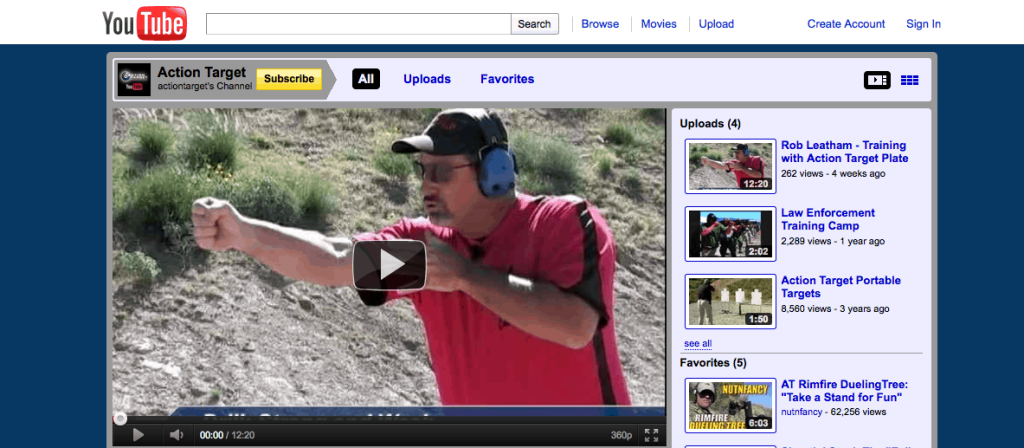
The Pinellas County Sheriff’s Office will soon train in their new state-of-the-art outdoor baffled firing range. This new range includes Action Target’s high quality outdoor Total Containment Trap, with a Screw Conveyor collection method. Both innovative systems make recycling much easier by catching all fired bullets in one 55 gallon barrel.
The new outdoor baffled firing range has a variety of tactical target systems, creating a multitude of training scenarios and environments that increases the range’s ability to do more than simply “qualifying” police officers.
Action Target Holds Successful LETC 2011

Law Enforcement Training Camp (LETC) 2011 was a recent success for Action Target and we’d like to thank all who helped and attended this unique training experience. Here’s what some of the attendees had to say about it: Dear Rick, Please accept this letter of appreciation to all of the Action Target staff and instructors […]
Action Target Announces Early Registration for 2011 Law Enforcement Training Camp
For 20 years, Action Target has hosted one of the most comprehensive training camps for law enforcement in the United States. Law Enforcement Training Camp (LETC) is a week-long curriculum consisting of four eight-hour classes that are taught by world-class firearm instructors. This year’s LETC provides highly qualified instructors with backgrounds consisting of the Safariland […]
Free Action Target Webinar featuring Hufcor’s FlexTact
We know that scenario training can be expensive and difficult to create. In most cases, staff members are required to travel to off-site facilities and spend an average of 4-8 hours reconfiguring a single scenario, shortening time spent actually training. That is why we are proud to offer you a scenario training system that configures […]
Why Train on Moving Targets?

Too much of our firearms training is static. That is to say, we seem to spend most of our time and ammunition shooting at single, motionless targets standing directly in front of us. Since this scenario has little to do with what we encounter on the street, why do we continue to train this way? One reason may simply be tradition, or “…because that’s the way we’ve always done it.” That’s not a good enough reason for me either, so what say we just forget that one. Other reasons might include: “We don’t have any moving target equipment” or, “We have enough trouble just getting our trainees to hit the targets that are standing still!” These are valid concerns, and in this article I hope to offer some suggestions and advice that will help you to overcome them both.
Training on Steel (Part Two)
In a previous article I discussed the advantages of training on reactive steel, the primary one being a dramatically shortened learning / performance improvement curve. Other advantages include cost effectiveness. Say WHAT? Isn’t steel expensive? Well, if you are your department’s Range Master or Chief Firearms Trainer, how much do you budget a year for paper or cardboard targets? Cardboard or foam backers? Staple guns and staples? 1” x 2” sticks to staple the targets to or 2” X 4” frames and particle board? How many staple guns grow feet and walk off the range each year? How much time is spent per relay stapling up new paper or cardboard targets? What about high wind and rain? The point is, you can shoot on steel in all kinds of weather, and all you need is a spray can of paint to re-spray the target(s) for the next shooter(s).
Rangemaster: Behind the Scenes in Firearms Training
Those of us who have either worked in law enforcement or closely with public safety personnel know there are many other positions that support a first responder. Courts have bailiffs, the jails and prisons have correctional deputies/officers, all of which are sometimes the “forgotten cops” since they are not always in the public’s view. There […]
Training on Steel (Part One)
Why train on steel? The shooter learns faster. Traditional cardboard or paper targets only give the shooter and the coach one feedback, visual. If the bullet holes on the target are not visible (example: 5.56 mm at 100 yards), then the shooter and the coach have to play instant recall to try and determine what the shooter did well and what needs improvement. There is often a delay of several seconds if not minutes before the shooter receives feedback on how (s)he did, and it is difficult if not impossible for the shooter to remember what the sight picture, grip, and trigger press looked and felt like for each and every shot.
Reactive Steel Shooting – Auto Popper
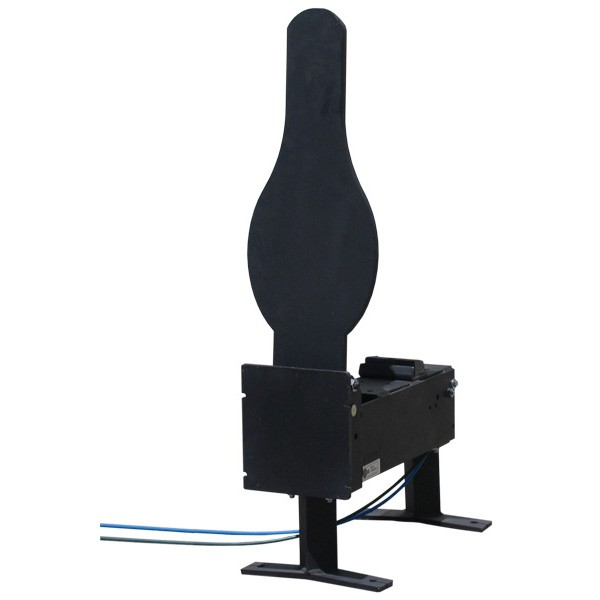
Reactive shooting is the skill a police officer must rely on when confronted with a suddenly hazardous situation. It is a critical skill that can save officers’ lives, and it is the result of conditioned hand-eye coordination developed by training on Action Target air-powered reactive steel systems. As we learn more and more about the […]
Enhance Training Realism
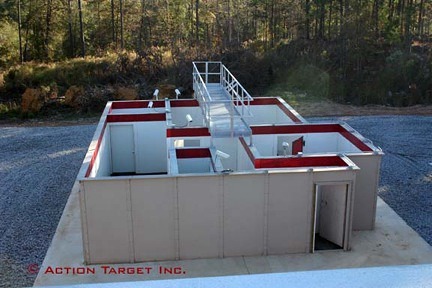
Be honest. How many people reading this have attended or even taught a training course where you have used 2’X4” pieces of lumber to outline a room? How many of you have used this wood-outlined configuration for dynamic or static entry training? What about searching rooms outlined by strips of wood? These concepts are good […]