
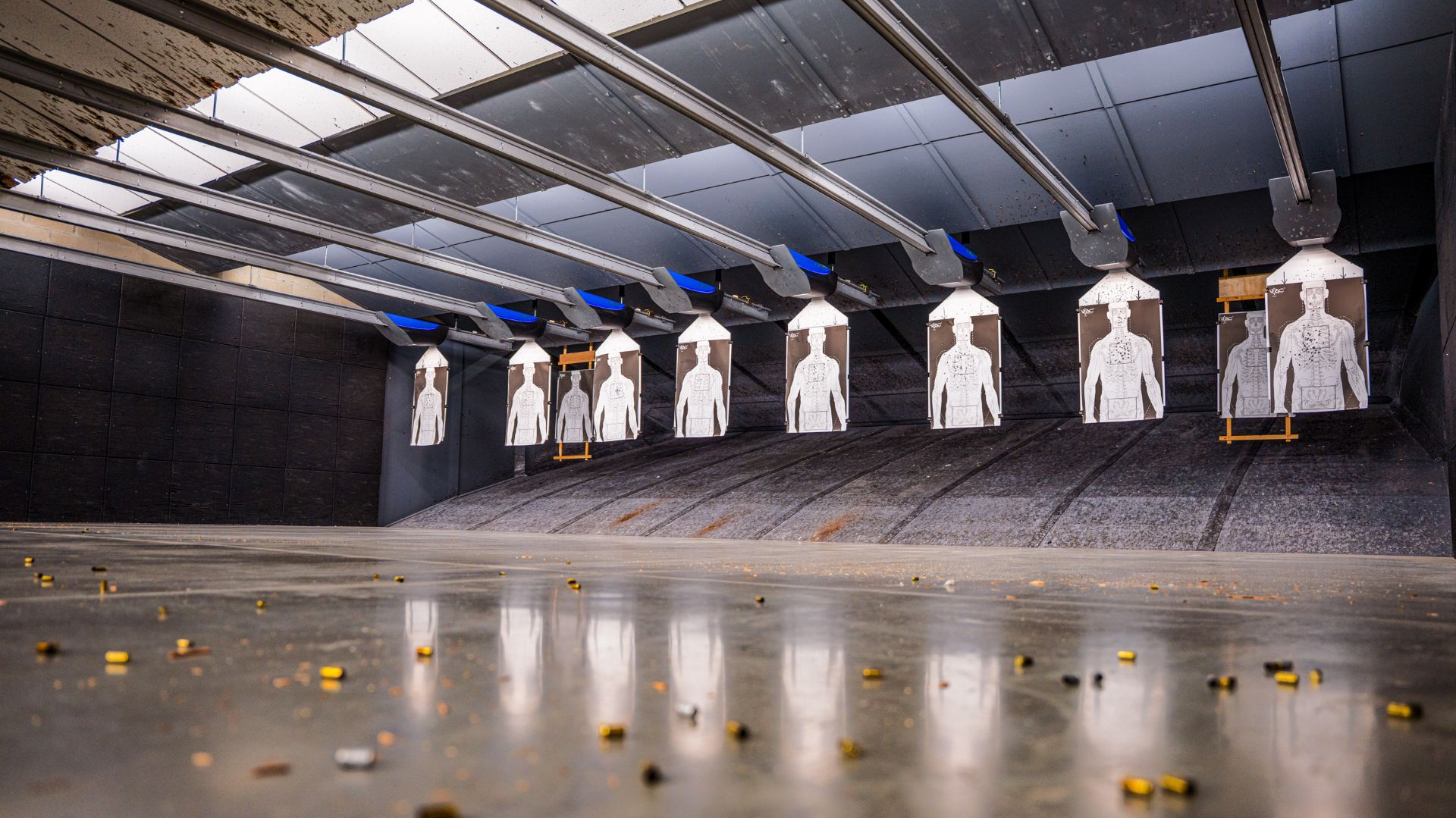
View of downrange of the gun range Lake Erie Arms, OH

Why Do Gun Ranges Ask for an ID? What to Bring, What Gets Checked, and Why

QUICK ANSWER

  • Most ranges verify a government-issued photo ID to confirm age, attach your signed waiver, and tie rentals or incidents to the right person.
  • Ranges don’t generally run federal NICS (National Instant Criminal Background Check System) background checks to let you shoot. NICS is for firearm transfers by licensed dealers under 27 CFR § 478.102. If you rent and use the firearm on the range, no NICS is required; if a loan/rental goes off-premises, a background check is required.
  • Some states require extra credentials (examples: Illinois FOID; Massachusetts FID/LTC; New Jersey FPIC).

Table of Contents

Disclaimer: This guide is informational and not legal advice. Laws change and vary by state. When in doubt, call your range or consult an attorney.

WHY GUN RANGES CHECK YOUR ID

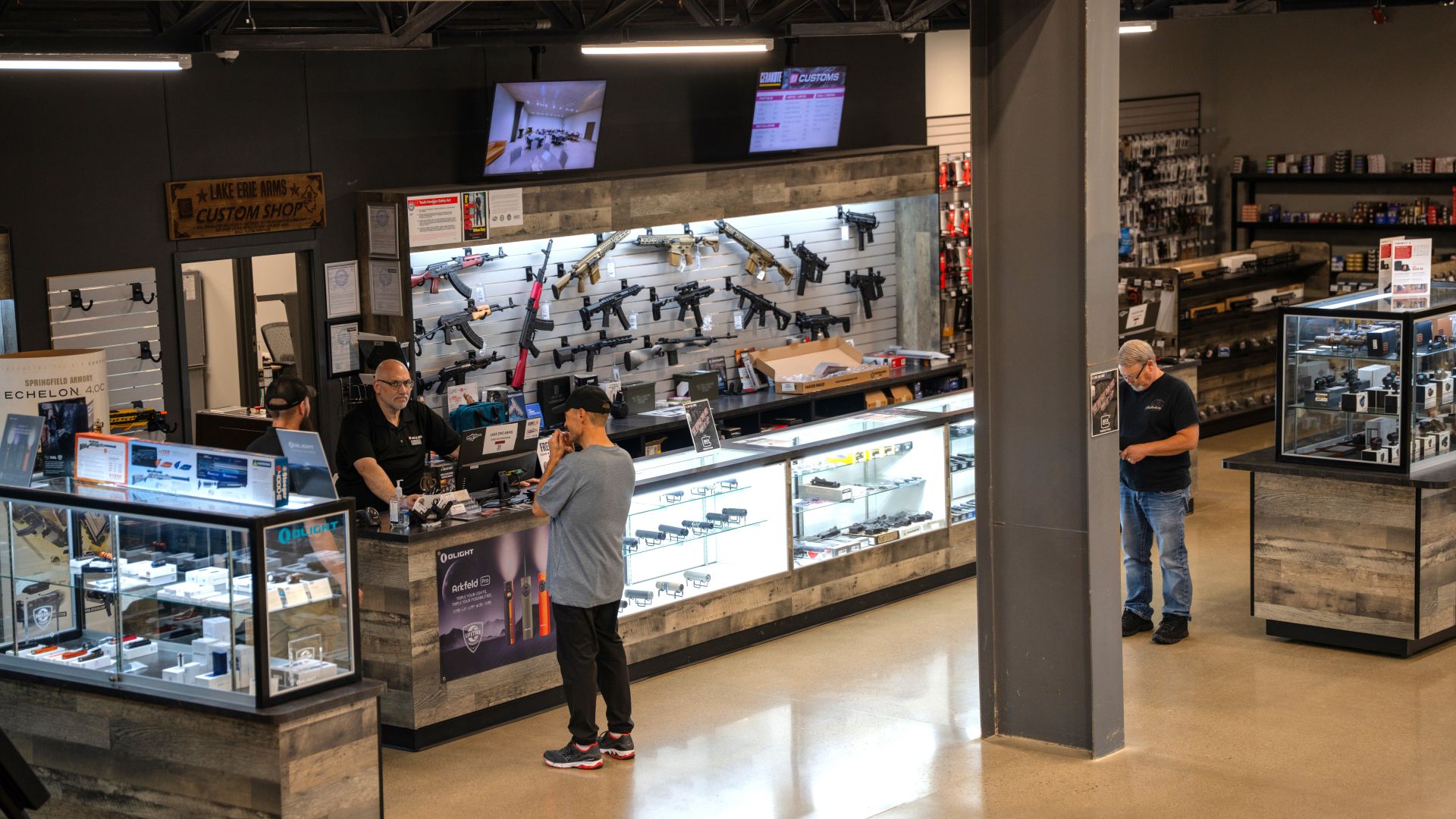
Ranges verify identity for age rules, liability waivers, rentals, and safety/accountability. If a firearm is rented for use on-premises, federal law does not require a NICS check (National Instant Criminal Background Check System). If a loan or rental goes off the premises, a background check applies because that is a transfer. See the ATF’s rental FAQ and the transfer rule.

DO GUN RANGES DO BACKGROUND CHECKS?

Not for entry or lane use. NICS is designed to determine whether a firearm transfer may proceed; it’s not an “entry screening” tool for ranges. See the FBI’s NICS overview and the regulation that implements background checks for transfers.

  • On-premises rentals: No NICS required.
  • Off-premises loans/rentals: NICS required before the firearm leaves the premises.

Note: Some private clubs and commercial facilities that sell memberships (especially those offering unsupervised access) may run a membership background check during signup. 
AGE AND ELIGIBILITY BASICS (FEDERAL OVERVIEW)

Federal law is as follows:

  • Under 18 & handguns: Federal law generally prohibits handgun possession by minors, with limited exceptions (e.g., certain supervised activities). ATF’s Youth Handgun Safety Act notice summarizes 18 U.S.C. § 922(x).
  • Buying from an FFL (Federal Firearms License): Dealers may sell handguns only to 21+ and long guns to 18+, subject to state law; see 18 U.S.C. § 922(b).

Ranges often set stricter house policies than the federal baseline. Check your local range page before you go.
STATE CREDENTIALS SOME RANGES MUST CHECK (EXAMPLES)

*Last reviewed: September 30, 2025*

A few states require proof that you’re allowed to possess firearms/ammo, not just buy them. If you shoot or rent in these places, ranges may need to see:

  • Firearm Owner’s Identification (FOID) to legally possess firearms or ammunition. 
  • Firearms Identification (FID) or License to Carry (LTC) to possess/carry, unless exempt.
  • Firearms Purchaser Identification Card (FPIC) process via the state’s FARS portal.

Disclaimer: Regulations change frequently and vary by city or county. This is not legal advice. Confirm current requirements with your range and your state authority before your visit.

HEADED TO THE RANGE THIS WEEK?

Get fresh targets and essentials before you go.

WHAT IF THE RANGE SCANS MY DRIVER'S LICENSE?

Some ranges use an ID scanner to speed up check-in. Good privacy practice is to collect only what’s needed (e.g., name and date of birth) and publish a short information retention policy.

Tip: You can ask your range which fields they store and for how long. Transparent policies help everyone.

CAN FELONS GO TO A GUN RANGE?

Short answer: In most cases no, because federal law prohibits possession of firearms and ammunition by prohibited persons, including most felons. Handling a rental gun or ammo at a range counts as possession. See 18 U.S.C. § 922(g).

Details to know:

  • 18 U.S.C. § 922(g) bars prohibited persons from shipping, transporting, possessing, or receiving any firearm or ammunition. (See also the QuickFacts page from the U.S. Sentencing Commission.)
  • A conviction that is expunged, pardoned, or for which civil rights are restored may no longer count as a “conviction” for federal firearms purposes, depending on the terms and state law. See 18 U.S.C. § 921(a)(20) and DOJ guidance on post-conviction restoration. Talk to an attorney before attempting any range activity.
  • Federal law excludes “antique firearms” from the definition of a firearm (e.g., certain muzzleloaders), but ammunition possession is still prohibited under § 922(g). Many indoor ranges don’t allow black-powder firearms for safety/ventilation reasons—policies vary.

Bottom line: Unless your rights have been fully restored, do not handle guns or ammo at a commercial range.
WHAT TO BRING ON YOUR FIRST VISIT TO A SHOOTING RANGE

  • Government-issued photo ID (driver’s license or state ID).
  • Any required state credential if you live or shoot in a state that requires it (FOID, FID/LTC, FPIC).
  • Eye and ear protection (or rent/buy on site).
  • Closed-toe shoes and range-appropriate clothing.
  • For rentals: a valid ID and a payment card; some ranges require you to purchase their ammo for reliability and safety.
  • New shooter? Consider a short intro lesson—many ranges offer affordable first-timer packages.

THE BOTTOM LINE

Gun ranges ask for ID to verify age, attach waivers, and keep rentals and incidents tied to the right person; NICS background checks are for firearm transfers, not for walking in or using a lane, so on-premises rentals don’t require NICS while any loan that leaves the range does.

Some states also require a possession credential (for example, FOID in Illinois, FID/LTC in Massachusetts, or FPIC in New Jersey), so check your range’s rules before you go. If you’re wondering whether felons can go to a gun range, the answer is usually no unless rights have been formally restored.

Bring a government photo ID, any required state card, eye and ear protection, and take a moment to review how the range handles ID scanning and data retention so your visit is safe and smooth.

ADDITIONAL QUESTIONS

No. NICS is for transfers by licensed dealers, not for general range entry. On-premises rentals don’t require NICS; if a gun leaves the premises, they do.

A government-issued photo ID is standard. In a few states, ranges will also check state possession credentials (FOID/FID/LTC/FPIC).

To verify age and attach your signed waiver to the correct person. If an ID scanner is used, it reads standardized machine-readable fields.

FFLs can sell handguns only to 21+ and long guns to 18+; separate provisions restrict handgun possession by minors with narrow exceptions.

Standing in a viewing area isn’t the same as possession, but it can create risk depending on circumstances and local policy. Many commercial ranges won’t allow it. When in doubt, don’t attempt it without legal advice and documentation of rights restoration.

SHARE THIS ARTICLE

READY TO TAKE YOUR FIRST STEP?

From your first question to your final shot, Action Target is your trusted partner—guiding you every step of the way.

A large variation of the Action Target logo icon in white.

Written By: Action Target

Action Target is the leading global expert on modern shooting ranges. Since 1986, the company has partnered with thousands of range owners worldwide to design, install and maintain world-class shooting ranges, systems, and equipment for law enforcement, military, educational, commercial, and residential markets. Action Target provides solutions for indoor and outdoor shooting ranges, modular ranges, shotgun ranges, and shoot houses. As the industry’s broadest end-to-end solution provider, Action Target also offers a comprehensive selection of aftermarket range service including parts, and maintenance programs, rubber berm trap cleaning, metals recycling, hazardous waste and filter disposal, and an online store for range supplies and targets.