
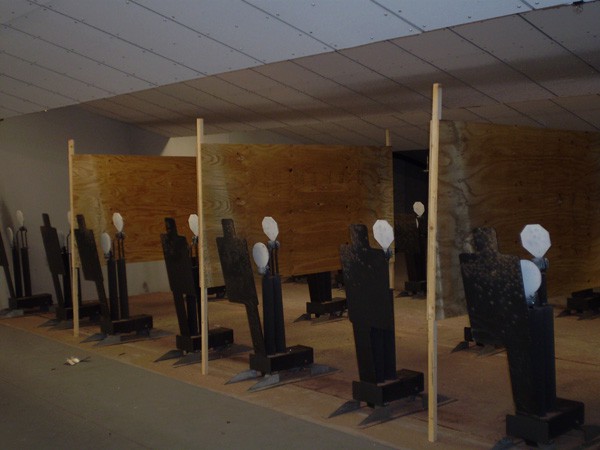
A little over a year ago, the Orlando Police Departments Indoor Shooting range opened for firearms training. The range is a total of 55 lanes and is broken up into 3 separate training bays.
Bay #1 is a 20 lane, 50 yard long shooting distance that includes Tactical ceiling baffling, a High Power Rifle rated Total Containment Bullet Trap with the auger collection method, Dust Collection Unit, and Air Handling system. The primary targets used on this range are reactive Steel targets, incorporating a steel center mass target with either a round head or octagon head being raised for “shoot” or “don’t shoot” scenario’s.
Bay #2 is also a 20 lane, 50 yard long range that also the same baffles, bullet trap, etc. and the targetry features the inverted runner, swing down targets, and DTAPS decision making targets.
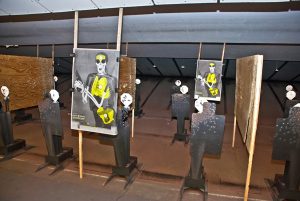
Bay #3 is a 15 lane, 100 yard Rifle Range. This has a “Fixed” firing line and has targets staggered at the 25 yard, 50 yard, 75 yard and 100 yard lines. (again, it has fixed baffles, and the TCT trap, air handling system, etc)
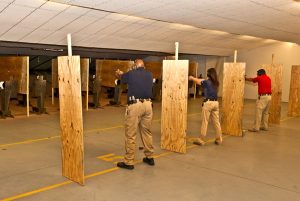
All of these ranges are designed to allow police vehicles to enter the range and replicate traffic stops.
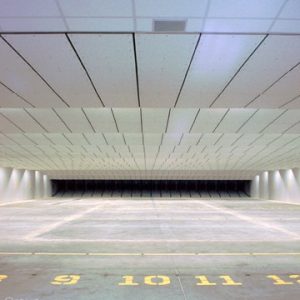
Eric Clapsaddle, the Orlando Police Department’s Rangemaster, designed several key ideas into the range, such as:
- The ability to recreate a variety of “low light” conditions again, replicating “real life” gun fight situations.
- The ability to create flexible barriers, walls, and cover with an insert-able panel for replicating “real life” scenario’s.
The Training that is provided to the Orlando Officers, is some of the closest we have seen to creating as real a situation as possible that the officers have faced or may face. The result of this type of training has been fantastic! Keep in mind the national average for “hits” in a gun fight 7 yards and closer is about 20%. With the training Orlando is doing, that number is closer to 80%, which is truly amazing, and life saving.
As you plan your range, think of ways you can recreate “real gun fights” that have happened in your area, or ones that may be common scenario’s you run into. Think of things like Traffic stops, multiple adversaries, working on scanning and avoiding tunnel vision, decision making targets (good guy / bad guy & shoot / no shoot), hostage drills, and so on. Try to allow the flexibility you need to be able to use these tools in training your officers.
The result will be a better protected community, better protected officers, and because the are better equipped, they will be better prepared.
Action Target thanks our first responders and all those who put themselves in harm’s way to protect the lives and property of others.
Stay Safe!
